Home
Story
Josh’s Story – Victims of Terror
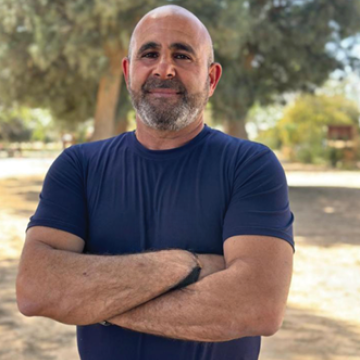
After returning from months of service, Josh struggled to transition back into civilian life, facing triggers, impatience and emotional disconnection from his family.
Josh entered Shavim, UIA’s early-intervention PTSD-prevention program, where eight weeks of group therapy, movement work, stress-management tools and holistic treatments helped him regain control, reconnect emotionally, and rebuild daily functioning.
The program transformed his home life, improving communication with his wife, restoring his relationship with his children, and strengthening his ability to manage triggers and conflict.
The impact was so significant that six members of his unit enrolled after witnessing his change, reinforcing Shavim’s broader ripple effect on families, workplaces and the wider community.
With more than 90 percent of participants returning to normal life across family, relationships and work, Shavim is a crucial program ensuring reservists can heal early, prevent long-term PTSD, and return to life with strength and stability.
When 37-year-old Jerusalem born father of four Josh* returned to civilian life after months in the field he expected the familiar comfort of family life to ground him. Instead, he found himself stuck between two worlds. “My daughters looked at me and said, ‘Daddy’s home,’ but Daddy wasn’t really home,” he recalled. “My body was back, but my mind was still in the field.”
Like thousands of Israelis called up after October 7, Josh carried the weight of sleepless nights, constant threat, grief for fallen friends and the pressure of being in charge of so many lives. Traditionally, the short bursts of duty allowed him to readjust quickly. This was different. “Everything at home felt slow and unnecessary. My patience was gone. Even choosing a movie triggered me. One night I pressed the remote so hard, I snapped it in my hand. That’s when I realised I wasn’t in control anymore.”
That loss of control was the turning point that brought Josh to Shavim, the UIA supported early-intervention program preventing chronic PTSD by helping Israelis process trauma before it takes root.
“When I arrived, I didn’t want to be there. I didn’t believe I needed help,” he admitted. But over the eight-week journey of group therapy, movement work, stress-management tools, equine therapy, and guided emotional processing, something began to shift. “After the third session, I had a small argument with my wife but this time I used the tools I learned in Shavim, calmed myself, and approached her differently. She looked at me and said, ‘This is very strange… how did you learn how to do that?’ And the answer was Shavim.”

The impact rippled across his life. His marriage stabilised. His connection with his children returned. His work relationships improved. And the loneliness that had clung to him from the battlefield began to dissolve. “A warrior prepares everything for when they are called up –from the plan, to the gear, to knowing every single detail about your team. But no one prepares you to come home. Shavim taught me how to do that.”
The program’s success is clear. More than 90 percent of participants report returning to normal functioning in family, relationships and work. For Josh, the change was profound enough that six members of his unit enrolled after seeing his transformation. “They told me, ‘After seeing you, we want to be like you.’”
Shavim is more than therapy. It is a lifeline – restoring parents, partners, employees, leaders and friends to themselves. As Josh put it, “Once you learn how to use the tools, everything becomes easier. Life fits back into place.”
Through UIA’s support, Shavim is helping those who have served us return not only from the field, but back to life. Find out more:
*Name changed to maintain the beneficiary’s privacy



1 April 2025


Copyright © 2026 United Israel Appeal. All rights reserved.


